Anyone travelling on Lanzarote who wants to leave the noise of the coastal resorts behind should also make a trip to Teguise. Not to Costa Teguise, the modern holiday resort, but to the actual Villa de Teguise in the island’s interior. Here, on a gentle rise below the volcano Guanapay, lies one of the best-preserved historic town centres in the Canary Islands.
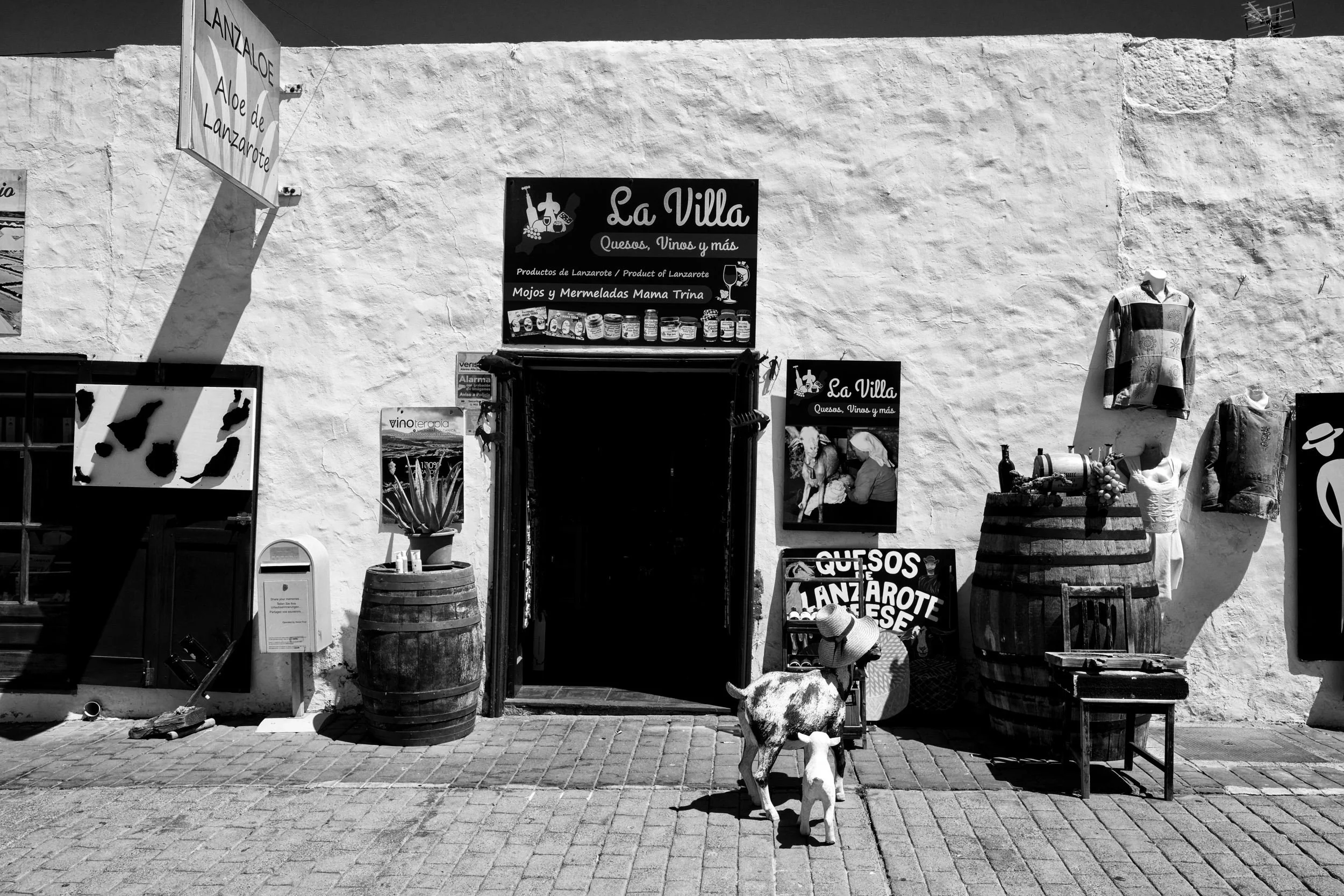
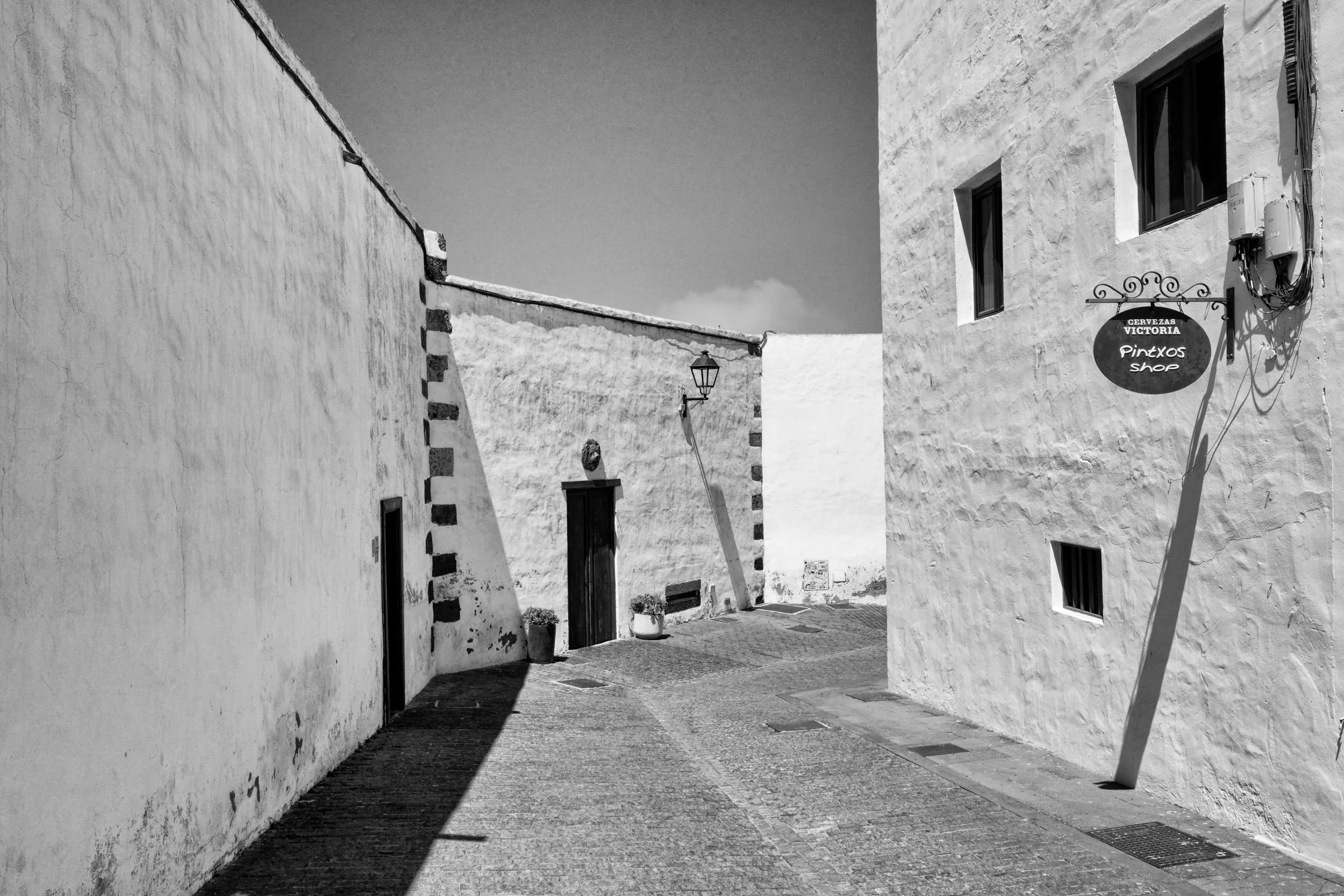
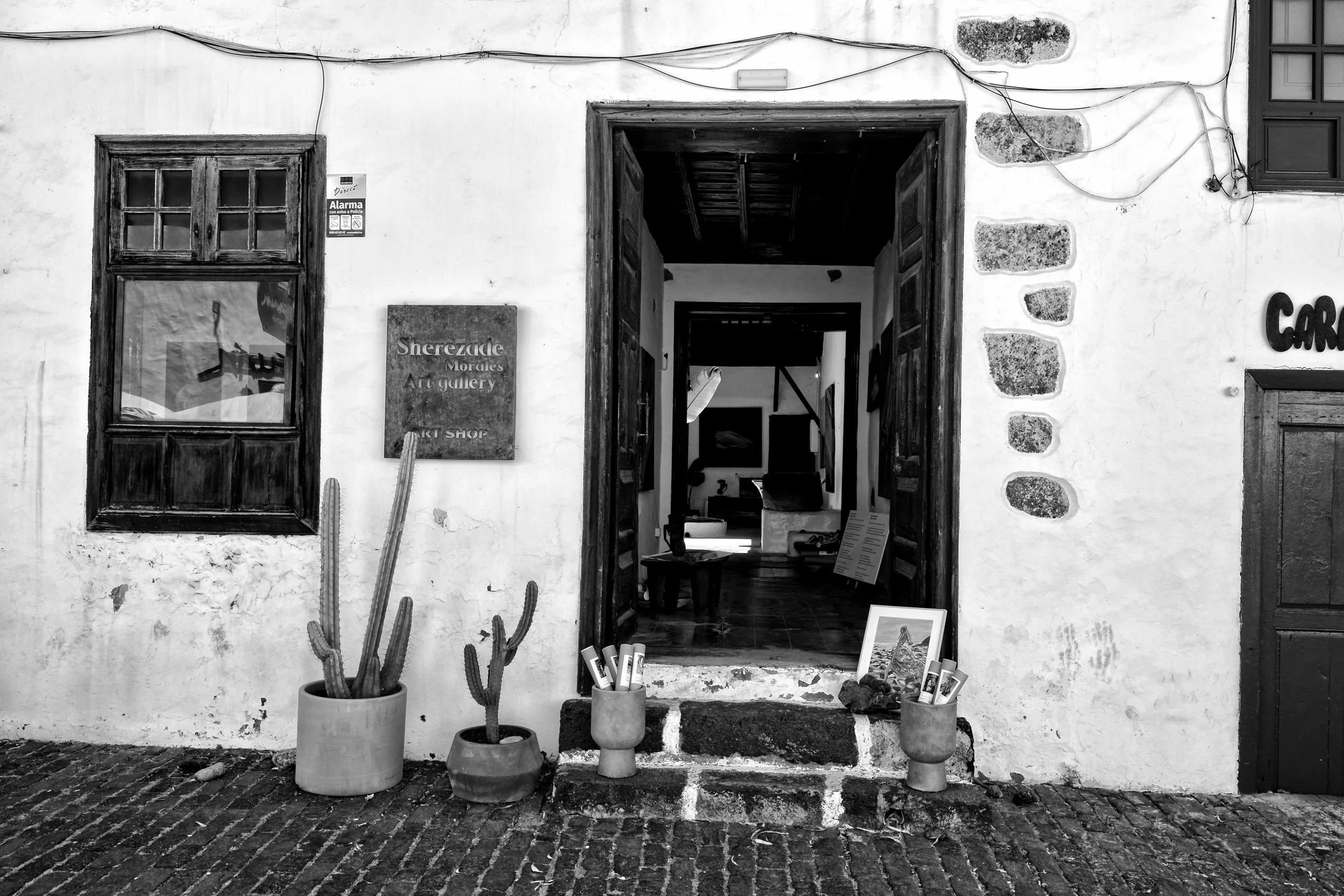
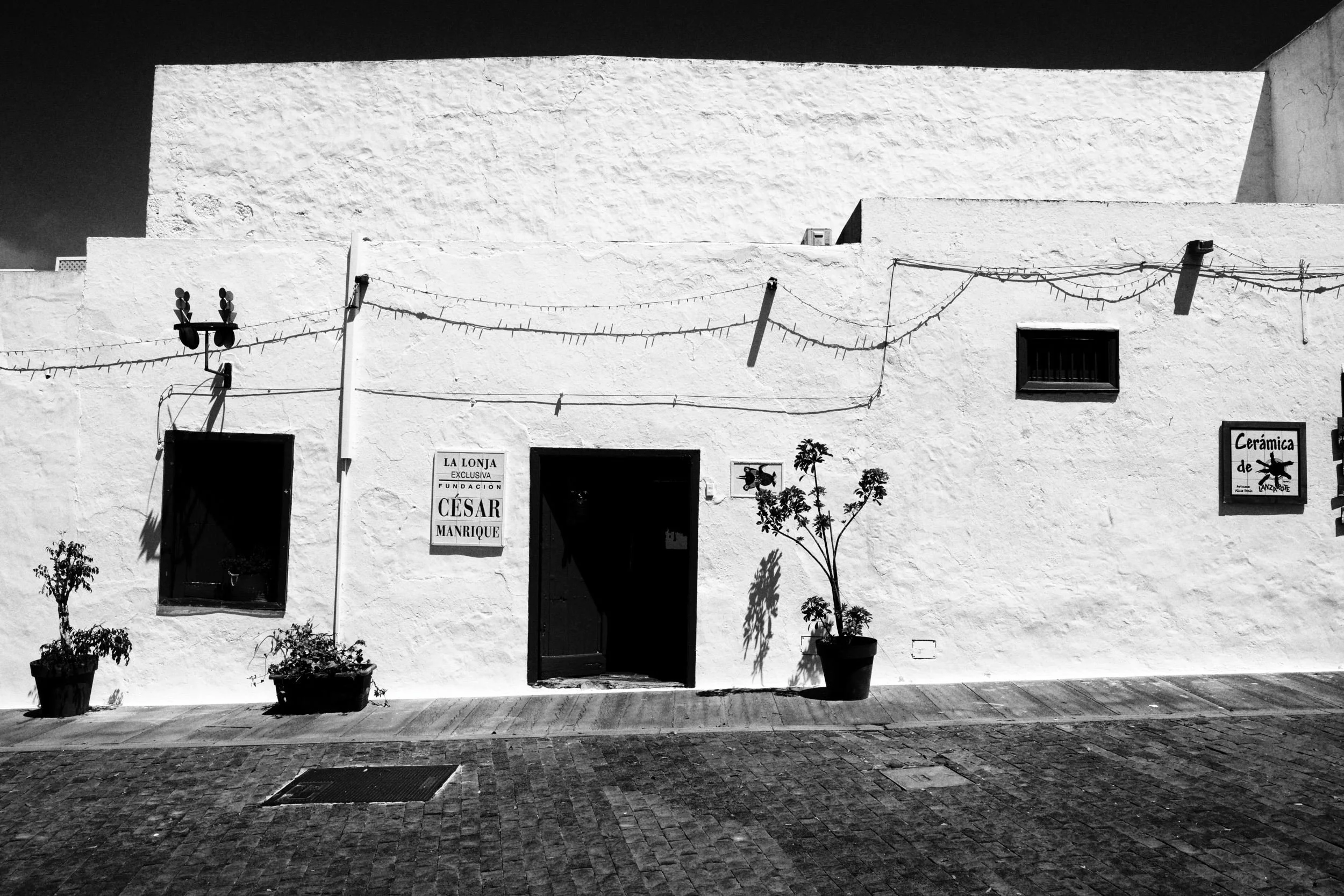
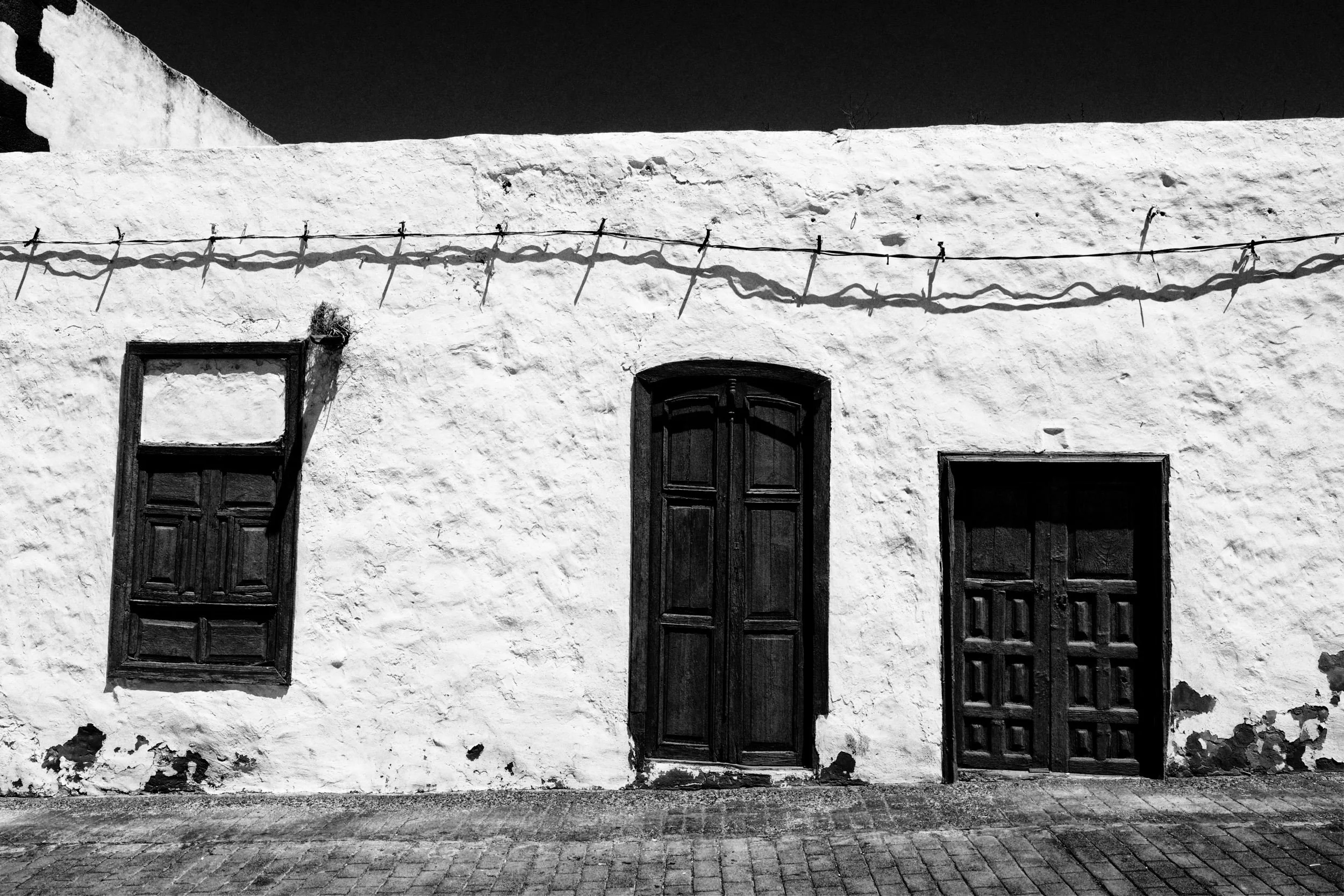
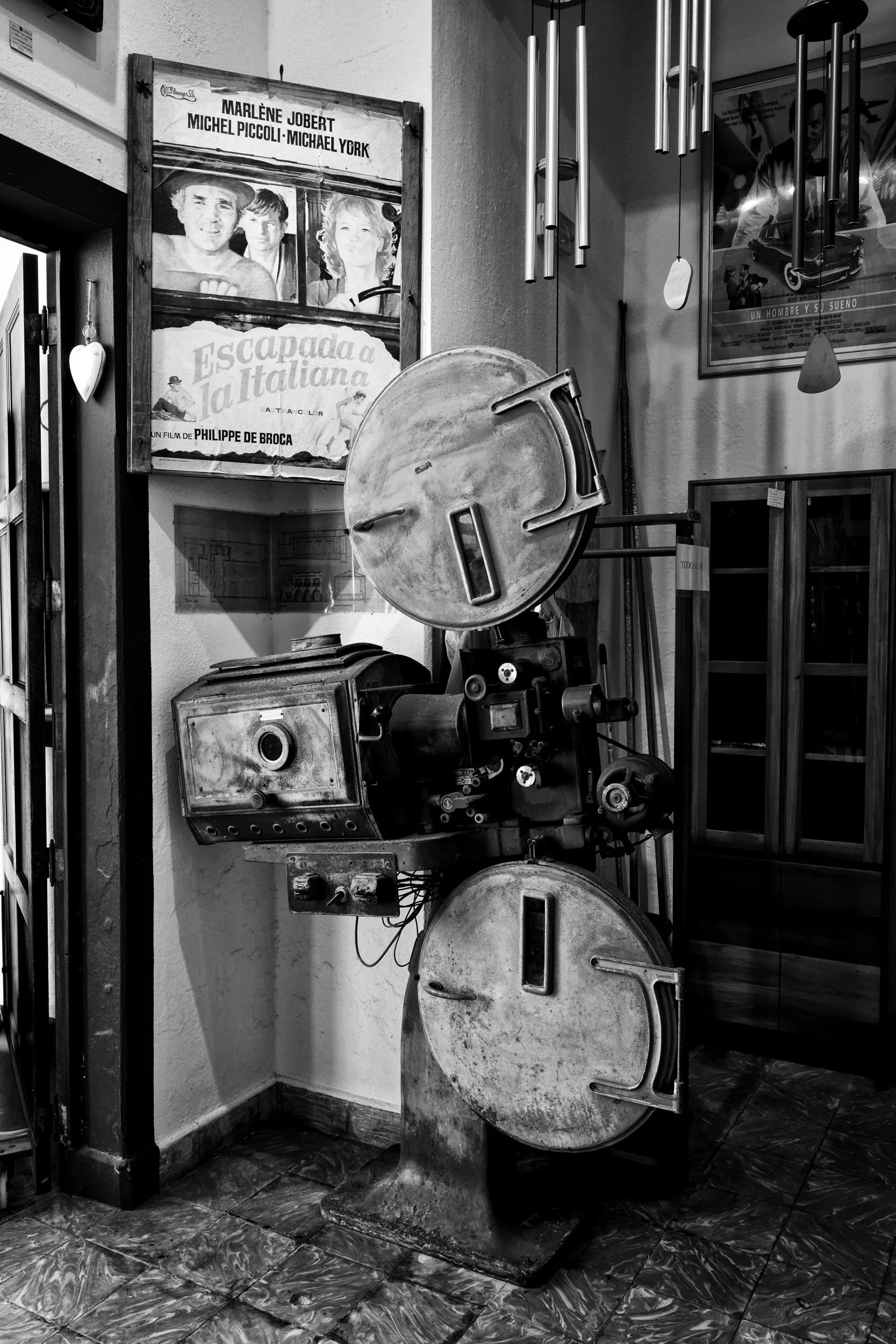
On two quiet afternoons I set out with my Ricoh GR IV. All the photographs were taken as RAW files and later converted to black and white in Silver Efex. It is precisely in monochrome that the surfaces gain their particular appeal: the brilliant white of the lime-washed façades, the shadows cast by all kinds of objects, and above all the aged wooden structures of the windows and doors.
A place that radiates calm and composure
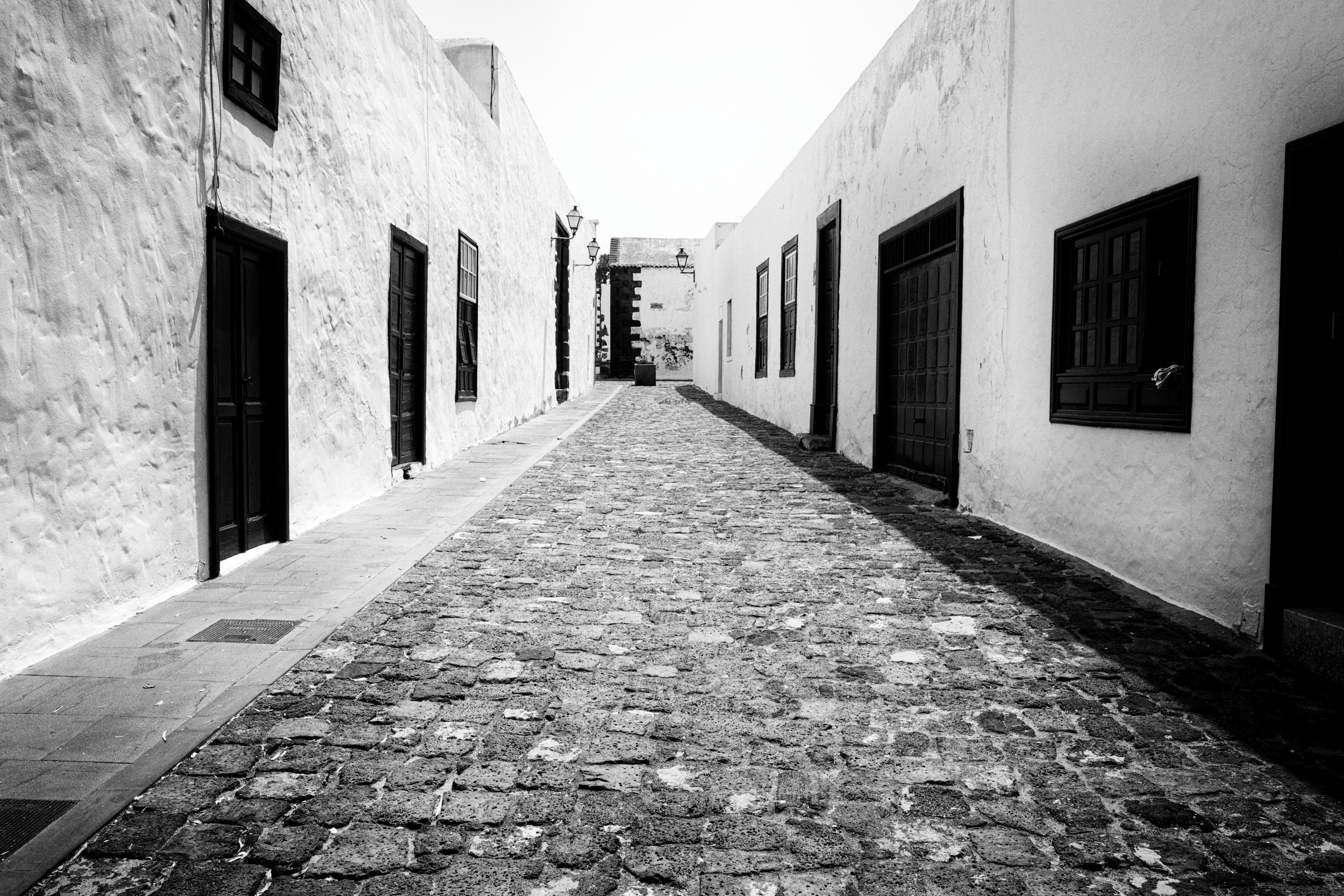
The centre of Teguise invites you to stroll slowly through its lanes. Most of the streets are cobbled, and the buildings remain low and clear in layout. The typical Lanzarote houses are low, often only one or two storeys high, and their façades are painted in that radiant white so frequently seen on the island. This white is not merely aesthetic. The lime paint also reflects the intense sun and helps keep the interiors cooler.
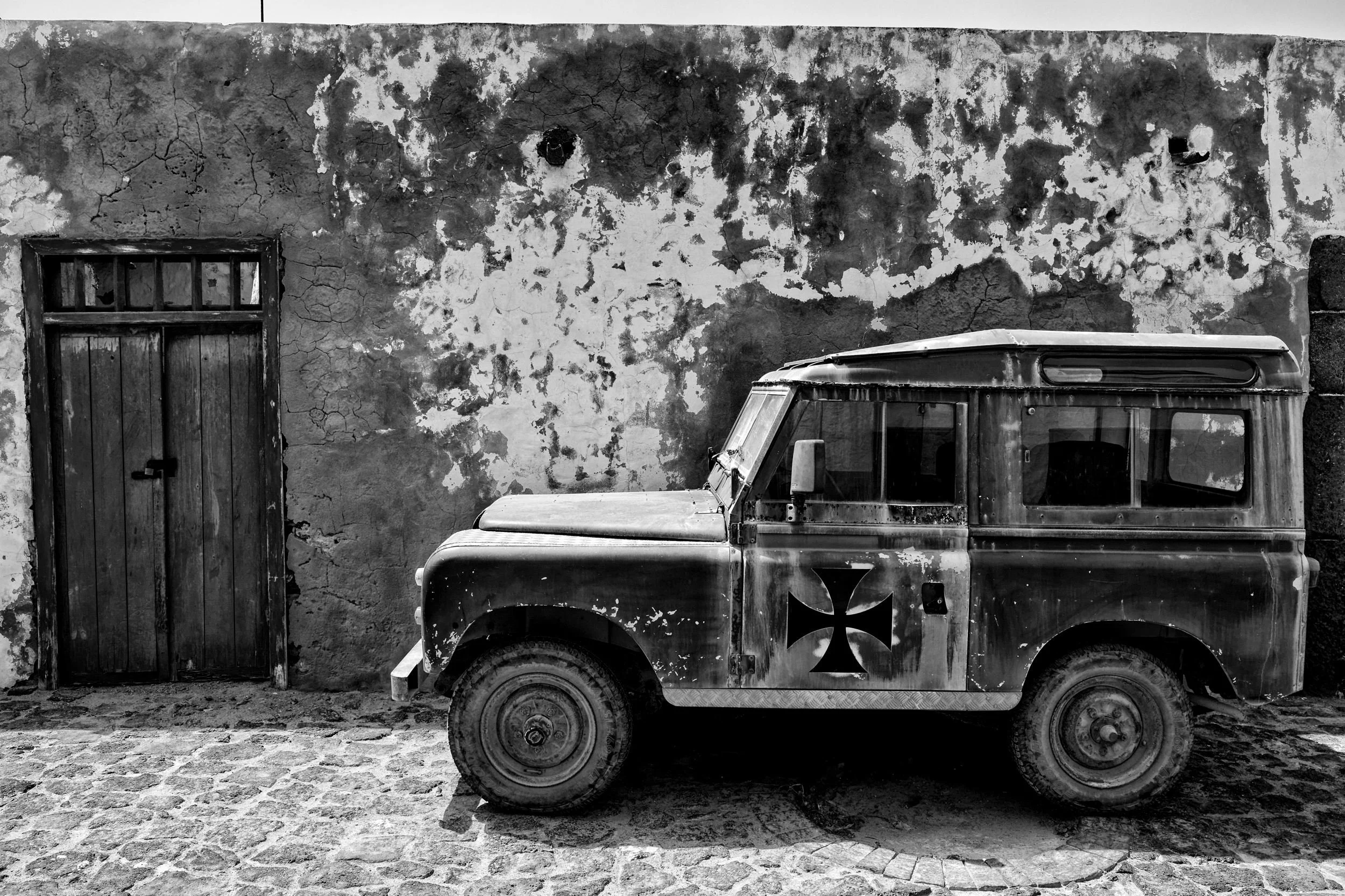
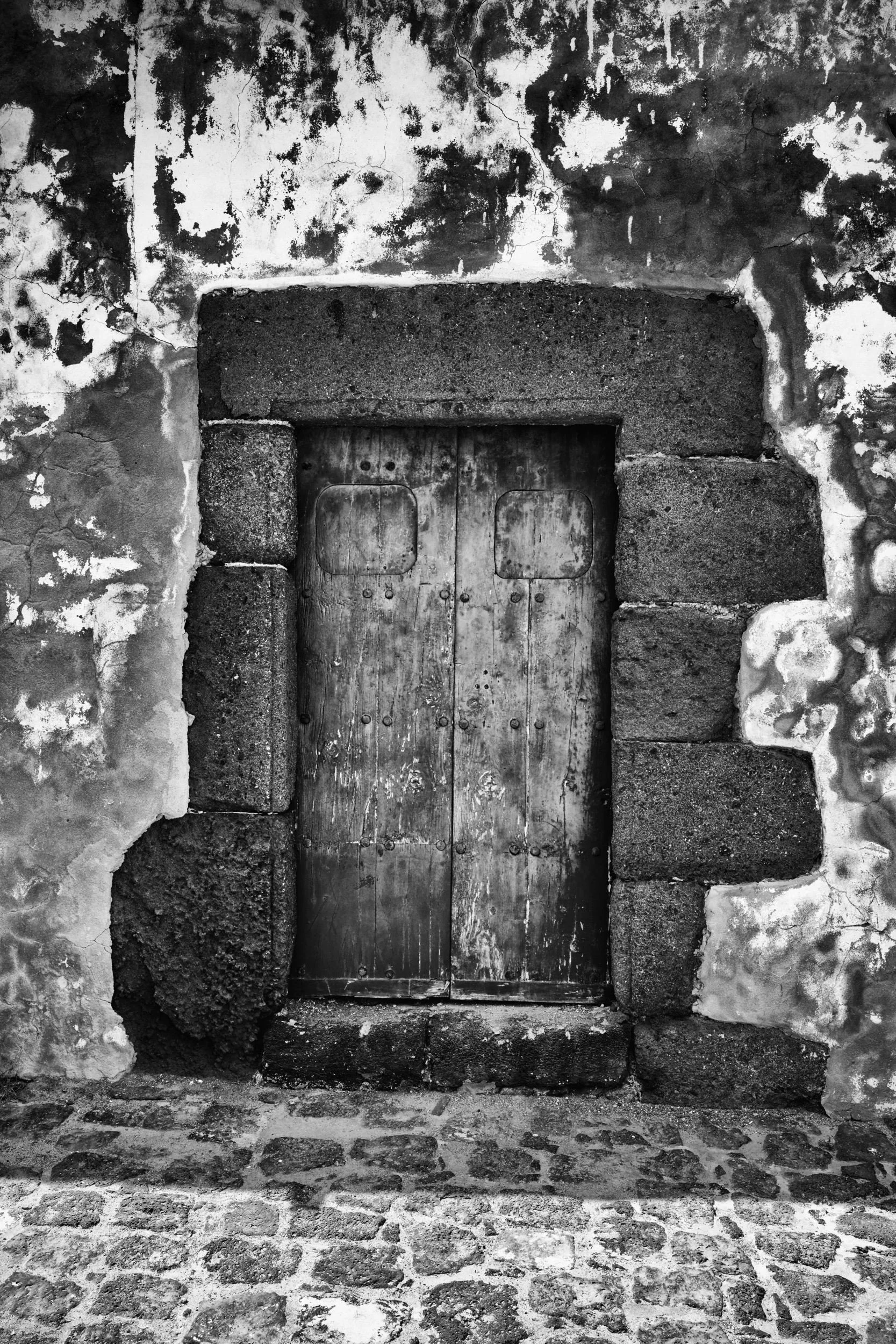
Particularly striking are the many old wooden windows and doors. Some are plain and functional, others still show traces of carving or old fittings. The wood is often dark and weathered, with cracks and flaking that speak of decades or even centuries. In black and white these textures stand out especially beautifully. The shutters still found on many houses often open upwards – a traditional solution that provides shade while allowing air to circulate.
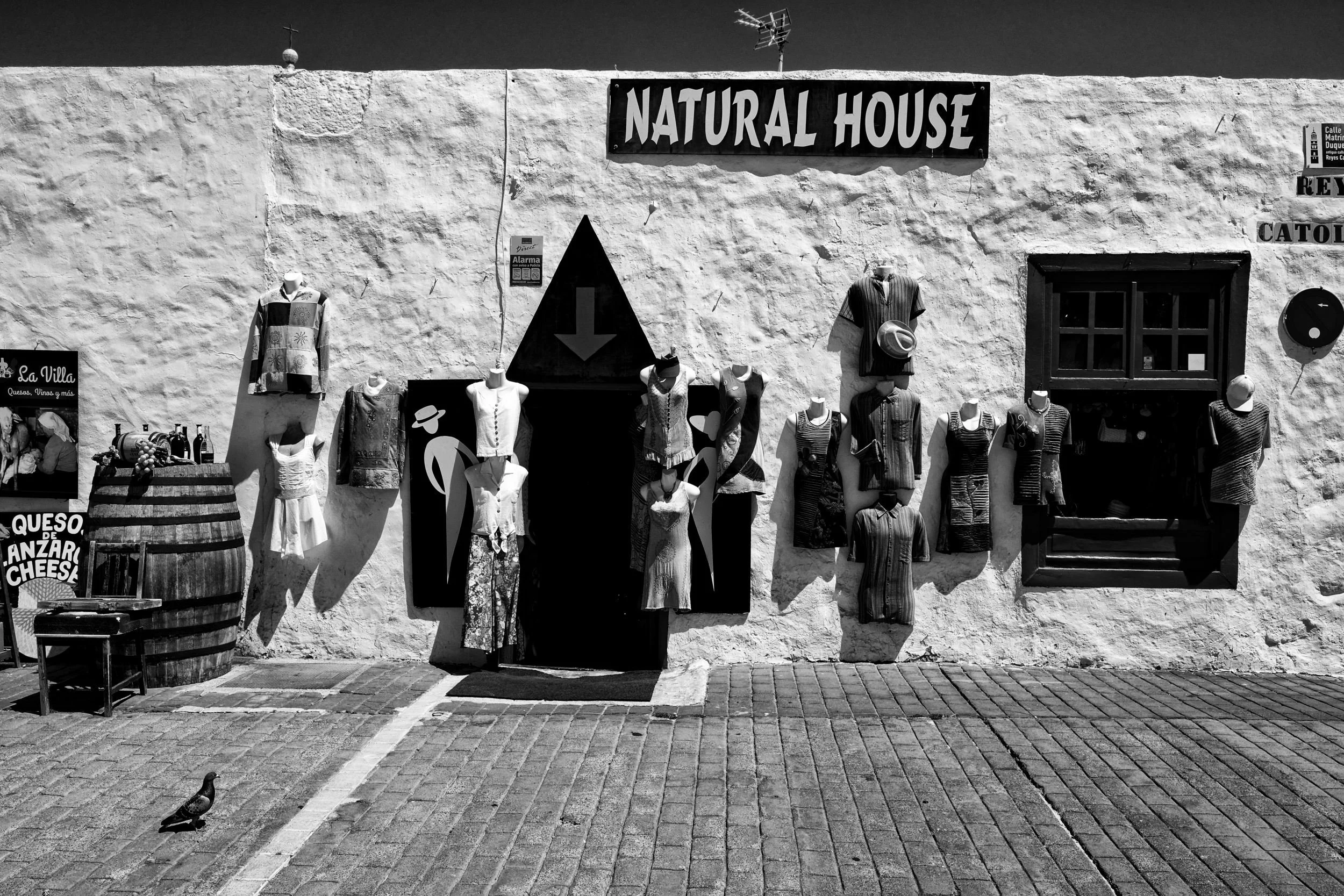
Scattered among the houses are small shops and workshops. Here handicrafts are offered: ceramics, woodwork, textiles, jewellery made from local materials, as well as products that recall the island’s agricultural traditions. Many of these shops do not feel like tourist souvenir stores, but like places where real work is still being done. You can stop, look inside and talk to the owners without anything being pressed upon you. The atmosphere remains relaxed – even on days when the well-known Sunday market is held and far more people are about than during the week.
A brief look at the history
Teguise is no accidental settlement. After the Norman conquest of Lanzarote beginning in 1402 under Jean de Béthencourt, the place was established around 1418 by his nephew Maciot de Béthencourt as an urban centre. Maciot married Teguise, the daughter of the last Majo ruler Guardafía, and named the settlement after her. Its inland location offered protection from the frequent pirate attacks that threatened the coasts for centuries, and it possessed better water resources and more fertile soils than many coastal areas.
For more than 400 years, until 1852, Teguise remained the political and religious capital of Lanzarote. Here sat the Cabildo, and here stood the most important administrative and seigneurial buildings. The church of Nuestra Señora de Guadalupe dates in its origins to the 15th century and was destroyed and rebuilt several times over the centuries – among other things by pirate raids and a fire in 1909. Particularly devastating were the attacks in the second half of the 16th and early 17th centuries, including the major raid by Algerian corsairs in 1618. These events are recalled, among other places, by the Callejón de la Sangre (Blood Alley).
For protection, the Castillo de Santa Bárbara was built and expanded on nearby Guanapay. After the capital function passed in 1852 to the growing port town of Arrecife, Teguise nevertheless remained an important place. In 1980 the historic centre was declared a Conjunto Histórico-Artístico and placed under protection. Many of the surviving noble houses, including the Palacio Spínola, and the former convents still bear witness today to its former significance.
What the black-and-white images reveal
My decision to convert the photographs to black and white was deliberate. The white architecture of Lanzarote thrives on contrasts – between glaring sun and deep shadow, between smooth façade and rough wood, between the strict rectangles of the houses and the organic forms of the old doors. In monochrome these tensions are brought out more clearly; colour tends rather to distract. The Ricoh GR IV, with its 28 mm equivalent lens and compact format, is excellently suited to street and architectural photography: one remains unobtrusive, can get close, and still capture the spatial context.
Teguise rewards slow, observant walking. There is no need to rush from one sight to the next. It is enough to let the eye travel across the façades, to study the texture of an old door lintel, or to look at the craftsmanship in one of the small shops.
A leisurely walk through Teguise lets you slow down at once. The pleasant calm the place radiates is clearly felt.
And you should definitely stop at Jonnie Bakes to enjoy one of the daily fresh-baked treats and an excellent coffee!